Why cook with wood
Hardwood smoke and radiant heat do things a gas burner cannot: a blistered pizza crust in under two minutes, a crust on a steak with real smoke flavor, vegetables charred over embers. Different woods add different character: oak and almond are steady and neutral, while fruitwoods such as apple and cherry are sweeter. The ritual matters too. Lighting the fire, letting it burn down and cooking over coals turns dinner into an event.
The wood-fired oven
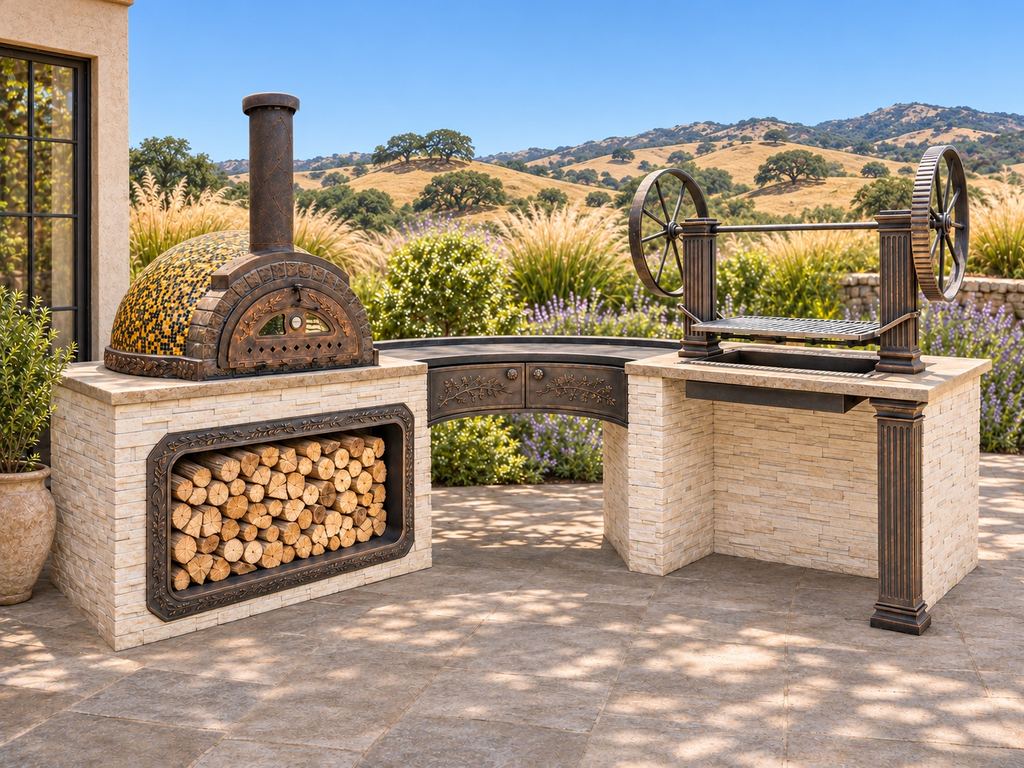
A wood-fired oven works by storing heat in its mass. A fire burning against the dome heats the floor and walls; the dome then radiates heat back onto the food while the floor bakes from below.
- Dome or barrel vault. Low, round domes heat evenly and fast, which is ideal for pizza. Barrel vaults hold more food for roasting and bread.
- Refractory materials. Firebrick, refractory castable and heavy materials such as natural stone and cast iron are rated for repeated heating. Ordinary brick, concrete and mortar can crack.
- Insulation. Thick insulation over the dome and under the floor keeps heat in the cooking chamber, shortens firing time and protects the surrounding structure.
- Flue and chimney. A properly sized flue draws smoke away from the cook and out of any roofed area.
- Curing. New ovens are cured with a series of small fires before full-temperature use to drive out moisture.
The Argentine grill (parrilla)
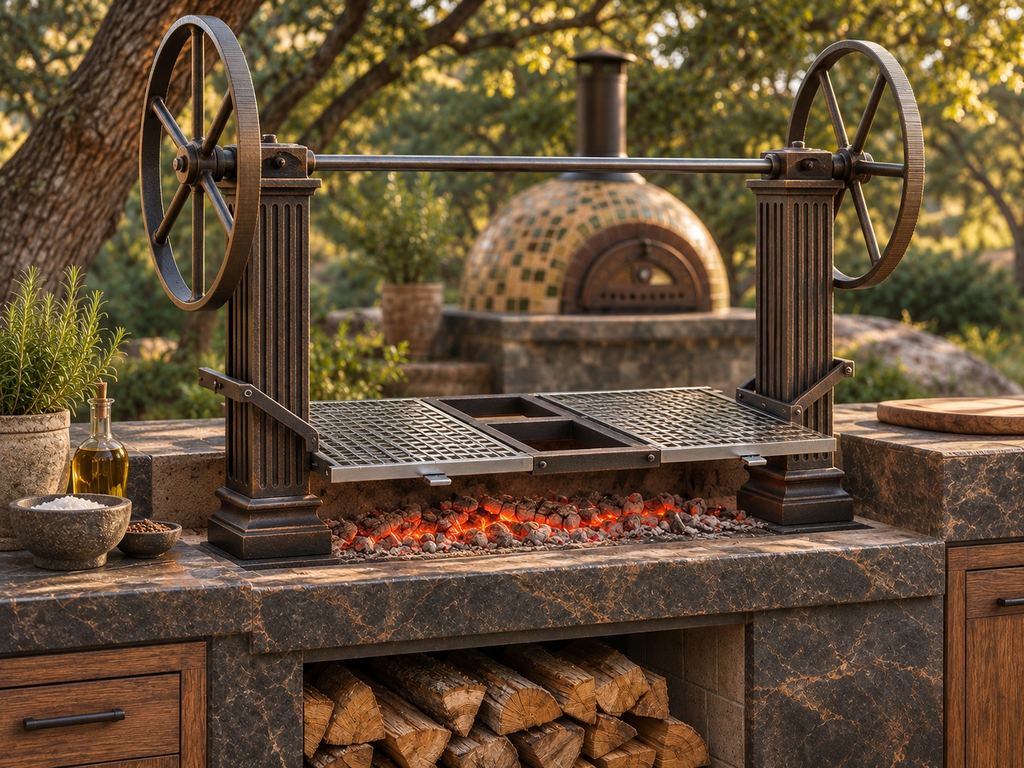
The Argentine grill is the most theatrical piece of a live-fire kitchen. Wood burns in a brasero, a steel or cast-iron fire basket at one side. As embers fall through, the cook rakes them under the grate. A flywheel or crank raises and lowers the grate on chains, so heat is controlled by height: high and gentle for slow cooking, low and fierce for searing. Grates with V-shaped channels carry rendered fat to a drip tray instead of into the fire, which reduces flare-ups. Because there is no gas valve or igniter, a parrilla needs no gas line or electrical circuit, only a noncombustible surround and room for the fire.
Designing around the fire
| Element | Why it matters |
|---|---|
| Wood storage | A dry, ventilated store within reach of the oven and grill keeps the cook in place and the wood seasoned. |
| Heat-proof landing space | Stone, cast-iron or stainless counters on both sides of the oven mouth and grill for peels, pans and resting meat. |
| Prep sink | Washing produce and hands without walking indoors; a cast-iron or stainless sink suits the aesthetic. |
| Ash and ember handling | A metal ash bin and a safe place for hot embers to cool. |
| Lighting | Task lighting over the grate and oven mouth so you can judge doneness after dark. |
| Seating at a distance | Guests want to watch the fire, so place bar seating in view but clear of heat and smoke. |
Cast iron, stone and artisan details
Live-fire kitchens suit materials with weight and character. Cast iron holds heat and wears handsomely; it is used for grill frames, sinks, cabinet fronts, storage frames and decorative columns or relief panels. Natural stone frames ovens and counters. These materials need simple care: cast iron should be kept oiled or coated, and stone sealed, to stay beautiful through wet winters.
Burn days, fire safety and clearances
Check before you design. Local air districts, including the Sacramento Metropolitan AQMD, Placer County APCD and El Dorado County AQMD, can restrict wood burning on poor air-quality days. Fire agencies restrict outdoor fires on high fire-danger days. Parts of the foothills are in designated fire hazard severity zones. Confirm the rules that apply to your address and to outdoor wood-burning appliances.
- Follow the oven and grill manufacturers’ clearances to combustible materials, fences, eaves and trees.
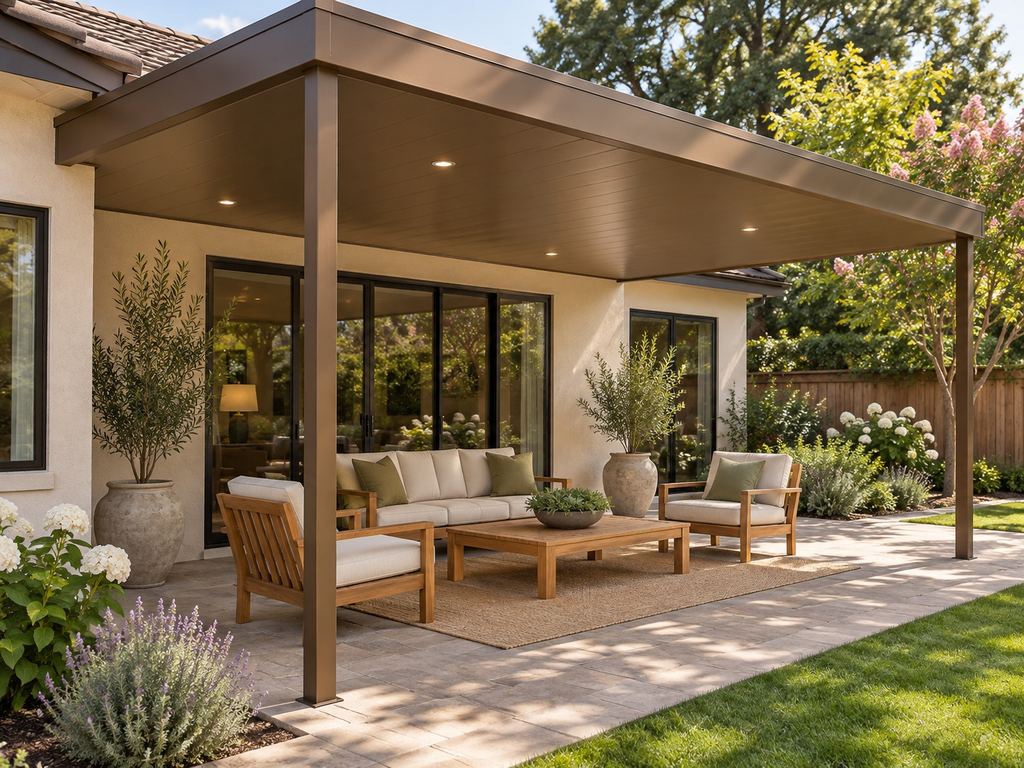
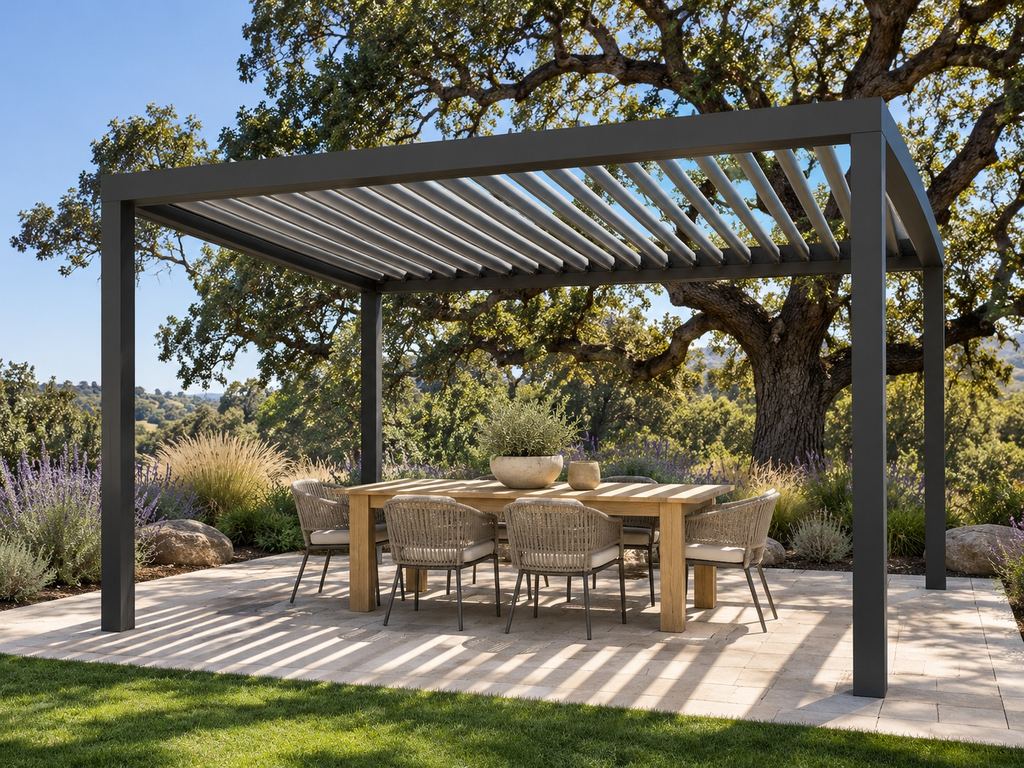
- Under any roof, use a properly terminated flue and favor noncombustible structures.
- Keep a hose or extinguisher within reach and a lid or door to smother the fire.
- Many homeowners add a gas grill or plancha so the kitchen still works on no-burn days.
Budgeting a wood-fired kitchen
Wood-fired ovens and Argentine grills range from modular kits to fully custom, hand-built pieces, and the surrounding structure, stone or cast-iron work, flue, cover and utilities often cost as much as the equipment itself. Our outdoor kitchen cost guide covers the full set of cost drivers.